
Chris Aldrich (@ChrisAldrich) on X
I’d like to invite the following and hope they can attend: @Eastgate @loopdouble @KicksCondor @tomcritchlow @Holden @BillSeitz @swyx @bonkerfield @AndySylvester99 @AndreJaenisch @KevinMarks @Xtof @VaillancourtMax @desmondrivet @mappletons @_jonesian https://t.co/rYJw6FaoCd
All Posts
The firehose of all my posts, including replies, likes and reposts.
-
Sep 8, 2021, 7:43 AM -04:00 -
Sep 5, 2021, 9:32 PM -04:00 
Rebecca Traister (@rtraister) on X
The @thenation ran Justice Sotomayor’s full dissent as its own piece and you should read every urgent word of it: https://t.co/jLMJ2fjZft -
Sep 3, 2021, 11:31 AM -04:00 -
Sep 2, 2021, 1:30 PM -04:00 I'll admit I gave up on the series after...book11? Still excited, though :-)

The Wheel Of Time – Official Teaser | Prime Video
The Wheel of Time arrives on Prime Video November 19, 2021.About The Wheel of Time: The lives of five young villagers change forever when a strange and power... -
Aug 31, 2021, 6:02 PM -04:00 I've been doing Spanish on Duolingo since December of last year, and I STILL have trouble mentally translating "Yo tengo" as "I have" as opposed to "You tango?"
-
Aug 25, 2021, 9:17 PM -04:00 Git is Terrible
If I say that my professional life has spanned RCS, CVS, Mercurial and Git, this tell you something (depressing) about my age.
Like everyone else, I'm now a git user, but I still say that Mercurial was the most elegant of the bunch, at least in terms of its emmiently predictable and well-designed CLI, even if the software itself gave up the ghost years ago.
Back in the day, when version control systems were still duking it out, I used to try and defend Mercurial to rabid git fans, mostly to no avail. I always felt that I was at a bit of a disadvantage in those conversation (cue the git fans yelling "Yeah, cuz mercurial SUCKS!"), because I was always willing to concede, despite appreciating Mercurial's virtues, that git actually did have its strengths as well as its weaknesses, while the git fans were rarely so magnanimous with any other VCS.
-
Aug 25, 2021, 12:13 PM -04:00 Borden-Carleton, Prince Edward island

-
Aug 25, 2021, 10:15 AM -04:00 Victoria by the Sea, Prince Edward Island

-
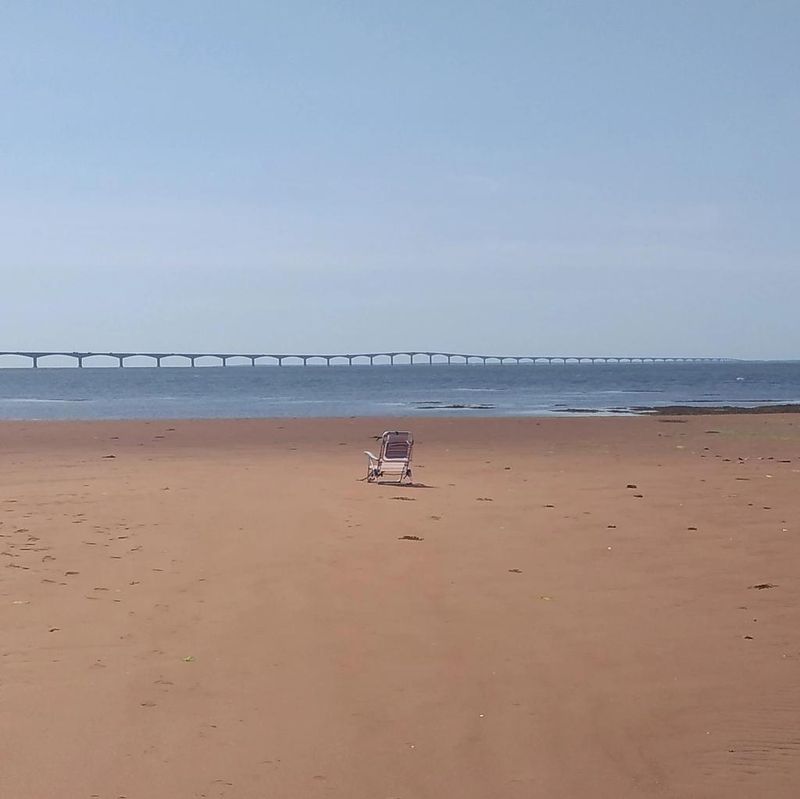
Aug 21, 2021, 8:44 PM -04:00 Lonely
-
Aug 18, 2021, 1:26 PM -04:00 Aha, so THAT'S what a crab pinch feels like
-
Aug 10, 2021, 5:53 PM -04:00 Drambuie has a bad reputation, but for what it is worth it's pretty good in a sour - 2 parts Drambuie, 1 part lemon juice, shaken over ice and strained. This is from a guy who actually likes Rusty Nails.
-
Aug 8, 2021, 7:57 PM -04:00 I find the Spanish tendency to drop the subject of a sentence when it's implied by the format of the verb to be both jarring and admirably efficient
-
Aug 1, 2021, 5:15 PM -04:00  Aug 1, 2021, 8:42 AM -04:00
Introducing a Microformats API for Books: books-mf2.fly.dev
Announcing the Microformats translation layer for book data. -
Jul 18, 2021, 7:36 PM -04:00 André Staltz - The Web began dying in 2014, here's how
Open Source Freelancer -
Jul 17, 2021, 10:34 AM -04:00 Reply to
I don't know about awesome, but I usually find myself enjoying SQL more than I think I will.
-
Jul 16, 2021, 3:03 PM -04:00 The Expanse is an awesome series of books but am I the only one who loves the fact that each and every chapter is almost exactly ten pages long?
-
Jul 14, 2021, 11:20 AM -04:00 Helen Keller died less than 10 years before I was born. I am ancient.
-
Jul 10, 2021, 4:18 PM -04:00 Dose number dos!
-
Jul 5, 2021, 10:54 PM -04:00 Reply to
I thought I read that they were developing boosters for the delta variant but I'm not sure.
-
Jun 27, 2021, 7:50 PM -04:00 Watching Domina on Crave made start watching I, Claudius, and it's super interesting to see the same historical figures portrayed on two entirely different shows, with two entirely different agendas
-
Jun 25, 2021, 5:49 PM -04:00 
Pip (@philippawarr) on X
I like big butts and I cannot lie. The person guarding the other door likes big butts and cannot tell the truth... -
Jun 14, 2021, 8:53 PM -04:00 
Good Bones
Life is short, though I keep this from my children. -
May 30, 2021, 11:07 AM -04:00  May 29, 2021, 2:18 PM -04:00
When did you join the IndieWeb?
(Hopefully this appears at https://www.indieforums.net) I think I first heard of the IndieWeb movement in 2016 sometime. It’s a bit hazy now, but I’ve a memory that I stumbled on it through a trail of links starting on Wikity. I’ve tinkered with web sites in some form or another for a long time, and I have happy memories of various weird Geocities experiments, sadly lost to the sands of time it seems. As far as independently hosting goes, I appear to have had a self-hosted blog since 2006 at ... -
May 20, 2021, 8:37 PM -04:00 -
May 11, 2021, 10:33 PM -04:00 Got my first shot #HousePfizer !


